


Zhejiang General Light Curtain Co., Ltd. was established in 2007. The company's factory covers an area of 44,762 square meters and has 316 employees. We mainly produce electric curtain motors, tubular motors, electric roller blinds, Roman rods, and their parts. At the same time, our design team provides product designs that best meet the annual market, which are favored by the international market and enable us to enjoy a higher reputation.
Our Advantages
Innovative Product Solutions
Our team members have diverse professional backgrounds and are good at a variety of different technical fields, including software development, hardware design, algorithm research, etc., and are committed to providing customers with the best technical solutions.
Advanced Production System
Our company is equipped with injection molding equipment workshops, stamping equipment, electroplating lines, electronic workshops, intelligent warehousing, ERP systems, etc., which can efficiently complete various processing processes.
Reliable Product Quality
Every year our products pass strict factory inspections by BSC, SEDEX and foreign supermarkets, and all materials meet REACH standards, with very high reliability.
Broad Sales Market
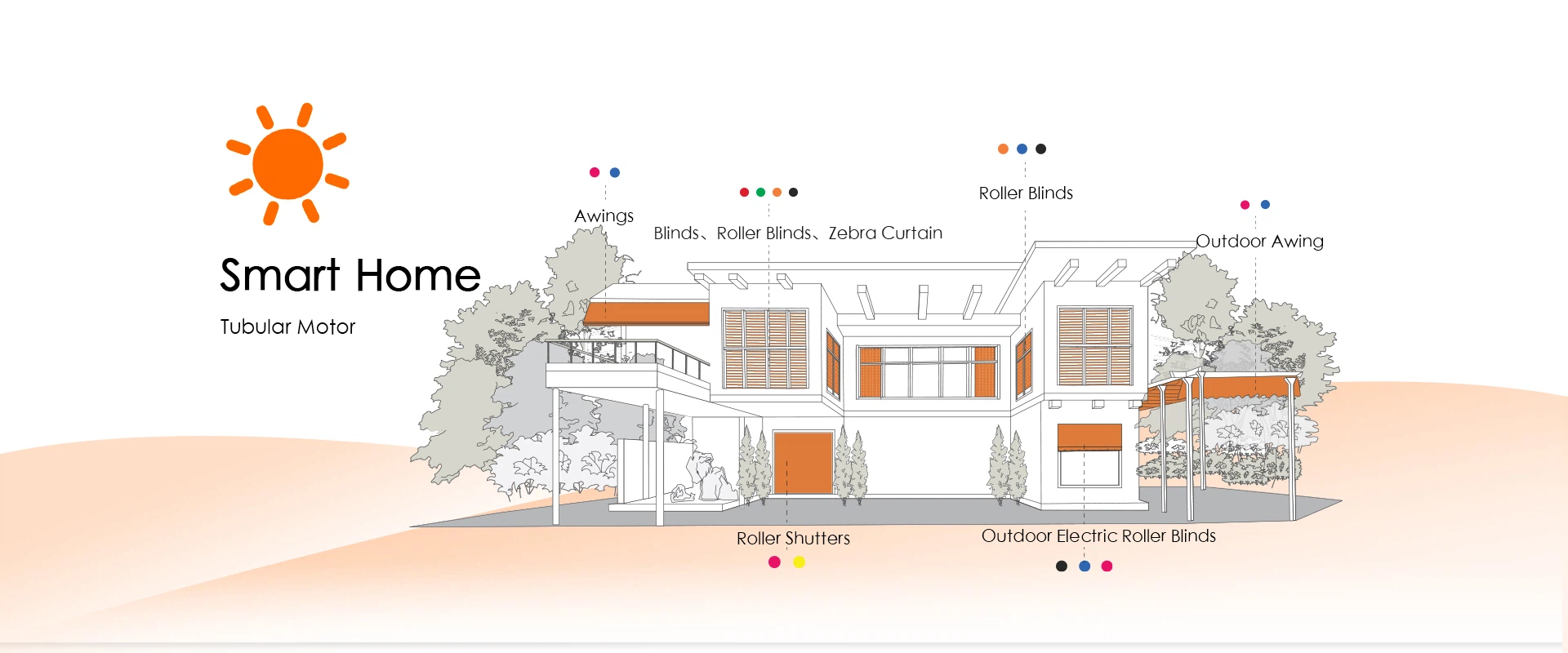
Our products are widely used in indoor shading, outdoor shading, safety protection systems, etc., and are exported to many countries, including the United Kingdom, France, Germany, the United States, Russia, Spain, Poland, Finland, Italy, Chile, Peru, etc.
-
![PC75 Curtain Motor]() Add to Inquiry
Add to Inquiry -
![Electric Curtain Rod]() Add to Inquiry
Add to Inquiry -
![Chain Robot]() Add to Inquiry
Add to Inquiry


Introduction to Curtain Motor
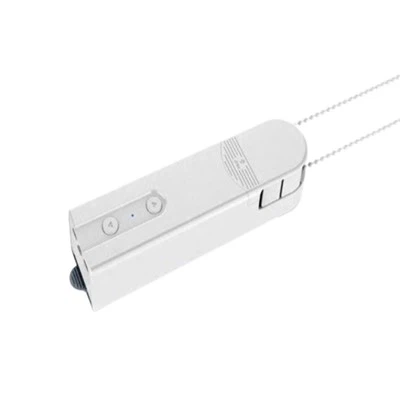
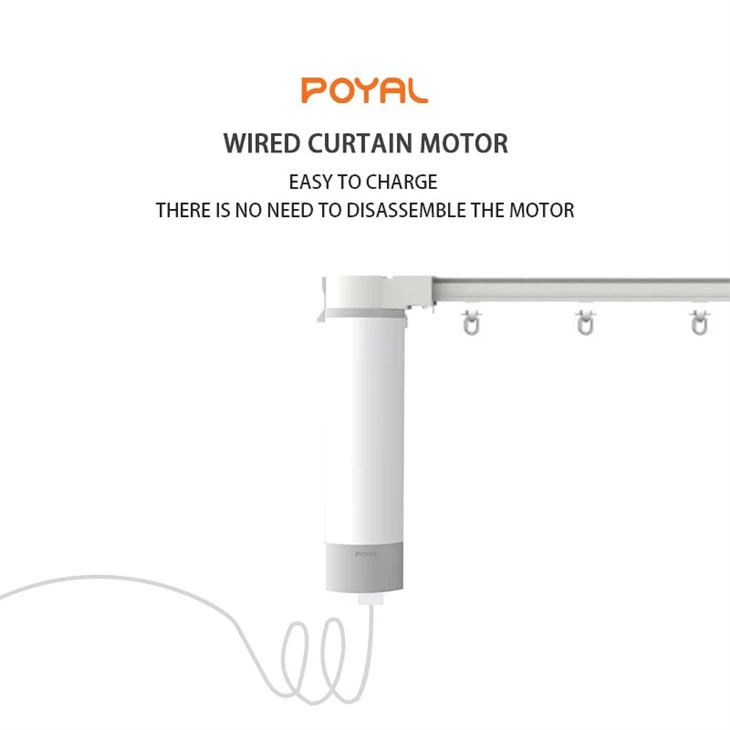
Smart electric curtain uses motors to pull the curtain on the track through the motors positive and negative to achieve opening and closing, and the commands can be time control, light control, wind control, or voice control, etc., the experience is more humane, and the control methods are also diverse, replacing the previous manual methods, which are convenient and practical.
Electric Tubular Motors
Electric tubular motors are widely used in motorized curtain systems due to their compact size and quiet operation. These motors are located within the curtain rod or tube and are capable of lifting heavy curtains effortlessly. They are suitable for both residential and commercial spaces and offer smooth and precise control over curtain movements.
Linear Actuators
Linear actuators are another commonly used motor type in motorized curtain systems. They consist of a motor that drives a linear pushing or pulling mechanism, allowing curtains to be opened and closed in a straight line. Linear actuators are more suitable for lightweight curtains and are commonly found in smaller residential settings.
Battery-Powered Motors
As the name suggests, battery-powered motors operate using rechargeable batteries, eliminating the need for direct electrical connections. These motors are user-friendly and flexible, often used in scenarios where power outlets are not easily accessible. However, they may require more frequent battery replacements or recharging.
Solar-Powered Motors
Solar-powered motors offer an eco-friendly solution for motorized curtains. These motors harness energy from the sun through solar panels, reducing the overall carbon footprint. They are highly efficient and suitable for areas with ample sunlight. Solar-powered motors can be an excellent choice for homeowners looking to adopt sustainable practices.
Advantages of Curtain Motors
Optimal Use of Magnetic Flux
Current always cuts the flux path at right angles. Due to its tubular design, all flux produced by the affected rod segment is used to generate force. The result is that less current is being used to produce equivalent thrust levels compared to less efficient designs.
Balanced Magnetic Field and Low Attractive/Repulsive Forces
Due to symmetry in the tubular motor design the magnetic fields are balanced. Even though there is iron in the thrust block, attractive forces between the block and rod are balanced and therefore relatively low compared to forcer-platen linear motors (a few pounds compared to a few hundred pounds).
Excellent Thermal Characteristics
Eddy current losses are insignificant in tubular linear motors due to their slot-less motor design. The tubular linear motor's thrust block incorporates its own heat-sink, and due to the motor's built-in cooling fins, the continuous force rating of the motor can actually increase as the application's velocity increases.
Large Air Gap
Tubular linear motors incorporate a relatively large air gap (approximately 1mm radial clearance) which tolerates some misalignment of the thrust block and thrust rod.
Application of Curtain Motor


Residential Use
Curtain motors are widely used in homes to automate curtain operation. They provide convenience and ease of use, allowing homeowners to control the curtains with the push of a button or through automated scheduling. Curtain motors are popular in living rooms, bedrooms, home theaters, and other areas where privacy, light control, and aesthetics are important.
Hotels and Hospitality
Curtain motors are extensively used in hotels, resorts, and other hospitality establishments. They offer guests the convenience of controlling curtains from their beds or through room automation systems. Curtain motors help create a luxurious and comfortable experience for guests while providing privacy and light control.
Conference Rooms and Auditoriums
Curtain motors find application in conference rooms, meeting spaces, and auditoriums. They enable the automation of opening and closing curtains or drapes for presentations, audiovisual screenings, or stage performances. Curtain motors can be integrated with control systems to synchronize curtain movements with other audiovisual equipment.
Theaters and Cinemas
Curtain motors are commonly used in theaters and cinemas to automate the opening and closing of stage curtains or movie screens. They facilitate smooth transitions between acts, performances, or screenings, enhancing the overall experience for the audience.
Retail Stores and Showrooms
Curtain motors are employed in retail stores and showrooms to automate the operation of curtains, creating an attractive and dynamic display. Curtain motors allow for easy adjustment of natural light, visibility, and privacy, enhancing the visual appeal of products or exhibits.
Smart Home Integration
Curtain motors can be integrated into smart home systems, enabling control through voice commands or smartphone applications. This integration allows users to program curtain movements, synchronize them with other smart devices, or remotely control curtains while away from home.
Maintenance Tips for Curtain Motors
A quick visual inspection can reveal some important details about the electric motor. Take a look at its physical condition and record your observations. If the electric motor operates in a rugged environment, you will see signs of corrosion and dirt buildup on individual components. Observe the motor’s windings to detect any hint of overheating, such as a burnt odor. Ensure relays and contacts are dust-free and aren’t rusted. All these factors may cause an internal problem as the debris may pose a threat to the efficient performance of the equipment.
Regular maintenance checks help ensure that electric motors won’t experience inconsistencies or stop working abruptly. Look for signs of wear and tear; any hint of excessive wear leads to commutation problems with the motor. This means you need to change the brush in order to regain the integrity of the equipment’s function. Also keep a check on the commutator to ensure it doesn’t have any dents, grooves, or scratches. These rough spots indicate brush sparking. Additionally, inspect the motor mount, rotor, stator and belts thoroughly. Replace all worn out parts.
Once you have inspected the various machine components, you need to test the motor’s windings. This test helps you identify any anomalies or failures in the windings. If you see any burn marks or cracks or smell a burning odor, conduct a mandatory motor winding test. The test involves disassembling the motor to determine the abnormalities of the motor. If the windings are overheated, the chance of serious damage is higher. Rewinding the motor and testing the wind insulation, which reveals information on the resistance level, are also critical parts of the test.
Check the bearings for noise and vibration as they indicate potential problems, like poor lubrication, dirt buildup, and wear and tear. If the bearing’s housing is too hot to touch, it may mean the motor is getting overheated or there is an insufficient amount of grease. The maintenance requirements for bearings may vary, depending on where the equipment is situated. You need to be aware of the different kinds of bearings being used in the plant and what their repair requirements are.
Sometimes, excessive vibrations are difficult to detect manually. But, if not detected on time, vibration can reduce the life span of an electric motor, which then eventually leads to motor bearing failure or failure of windings. In most cases, the cause of vibration is mechanical in nature, such as a faulty sleeve or ball bearings, too much belt tension, or improper balance. The electric motor can be tested by removing the belts or by disconnecting the load and then operating the motor. Sometimes, even electrical problems can give rise to vibrations. A few tests, such as field vibration analysis that is conducted by mobile instruments that measure the exact frequency and amplitude of vibrations, can help in detecting the exact cause of vibrations.
Recently, this method of inspection has become popular with predictive maintenance due to its desired outcome. With infrared thermography, an infrared camera is used to capture thermal images without interfering with the motor’s operation. These images provide a temperature profile of the electric motor by giving heat patterns at several points throughout the motor simultaneously. All mechanical systems produce a particular amount of thermal energy, therefore, they have normal thermal patterns along with a maximal temperature at which the motor can work. In case any problem exists, such as insufficient air flow, insulation failure, or degradation in the stator, the infrared camera will immediately detect the unstable voltage in the form of a thermal image, helping you find its cause and solution.
Factors to Consider Before Choosing a Curtain Motor
Motor Power
Electric curtain motors must ensure the entire curtain operates smoothly. If the power supplied by the curtain motor isn’t enough, it won’t be able to move the motorized curtain to the designated spot. On the other hand, if there’s too much power, it’ll be a waste. This is the reason why it’s important to choose a motor based on your specific needs.
Noise
Whether the curtains are used at home or in the office, they should operate at low noise. For this reason, the second factor to consider when choosing a motor is whether it can run with low or no noise. For consumers, knowing the specific noise level before making a purchase is important.
Service Life
This can be determined through a combination of factors such as noise level and motor power. Machines with a long service life will provide a better experience for consumers. Some manufacturers of curtain motors place great importance on this aspect.
After-Sales Service
When the machine is in use, faults can sometimes occur. When faults happen, repairs should be made by the electric curtain motor supplier. If a manufacturer does not have after-sales service, it will affect the customer’s experience. For this reason, buyers need to take after-sales service into consideration when choosing a curtain gear motor (also called curtain motor) manufacturer.
Installation
Electric curtains can be controlled wirelessly using a motor drive. When it comes to installation, there are both built-in and external types. For built-in electric curtains, the motor cannot be seen; only the track can be seen from the surface and the motor runs inside the track. For external type motors, the motor is exposed outside as the name suggests. Consumers can choose the suitable type according to their preferences.
Our Certificate
Certificates such as CE, CCC, FCC, etc. mean that our products meet specific quality, safety, and electromagnetic compatibility standards. Our products can legally enter specific markets, improve the competitiveness of products in the international market, and provide consumers with confidence.


Our Factory
Our advanced modern factory can complete all manufacturing processes such as stamping, die-casting, injection molding, welding, injection molding, surface treatment, electronic welding, etc., and quickly provide customers with products that meet their needs.

Ultimate FAQ Guide to Curtain Motors
Q: Can I motorize existing curtains?
Q: How do motorized curtains work with the help of its motor?
Q: Which type of motor is used in curtains?
Electric tubular motors are widely used in motorized curtain systems due to their compact size and quiet operation.
Q: How do automatic curtain openers work?
Q: What types of curtain motors are there?
Q: What does curtain motor maintenance include?
Q: Does the size of curtain motor matter?
Q: What is curtain motor?
Q: Can curtain motor be integrated with smart home systems?
Q: Is the travel length of curtain motor limited?
Q: What is a tubular permanent magnet linear motor?
Q: The working principle of electric curtains driven by curtain motors?
Q: What types of curtain motors are there?
Q: What are the benefits of curtains driven by curtain motors?
Q: How to choose curtain motor?
There are various types of curtain motors available in the market, including electric, battery-powered, and solar-powered options. Electric curtain motors are the most common and offer reliable operation. Battery-powered motors are suitable for areas with limited electrical access, and solar-powered motors are eco-friendly options. Choose the type that best suits your needs and preferences.
Curtain Weight and Size
It is essential to consider the weight and size of your curtains when selecting a motor. Different motors have different weight capacities, so ensure that the motor you choose can handle the curtains you have. Additionally, determine the track length required to fully cover your window to ensure a proper fit.
Noise Level
Silence is golden, especially when it comes to curtain motors. No one wants to be disturbed by noisy curtain movements. Look for motors specifically designed with noise reduction features to ensure smooth and quiet operation.
Control Options
Consider how you would like to control your curtains. Some motors can be controlled through smartphone apps, remote controls, voice commands, or integrated with home automation systems. Choose a control option that aligns with your preferences and existing smart home setup.
Q: How to check the curtain motor?
Q: What types of curtains can a curtain motor control?
Q: Can I install a curtain motor on my existing curtains?
Q: What power source is required for a curtain motor?
Q: Are curtain motors noisy during operation?
We're well-known as one of the leading curtain motor manufacturers and suppliers in China. We warmly welcome you to wholesale cheap curtain motor from our factory. All custom made products are with high quality and competitive price.
Curtain Track Accessory, electric roller blind motor